
What Is Digital Payment Fintech Solutions? A Business Guide
A tap on a phone at a coffee counter, a split dinner bill sent through Venmo, a card checkout that never showed you a card number. The question for a business owner or investor is different: what sits behind that tap, who regulates it, and what does it cost to plug into it? This guide covers the definition, the mechanics, the main types, the security stack, the compliance map and the real trade-offs.
Definition: fintech and digital payments

According to Investopedia's fintech entry, fintech is technology used to deliver or improve financial services, and payments are one of its most visible applications. A digital payment fintech solution is therefore any product that uses software to initiate, authenticate, route or settle a money transfer without cash or paper instruments.
That covers consumer apps (PayPal, Venmo, Apple Pay, Google Pay), merchant infrastructure (Stripe, Adyen, Square) and public instant-payment systems built on bank accounts (UPI in India, Pix in Brazil, FedNow in the United States). The common thread is that money moves as data, and a licensed institution sits underneath to hold the funds.
That account base is what digital payment products are built on.
How a digital payment works
The steps below describe a typical online card or wallet payment. Bank-transfer systems skip some stages but follow the same logic.
- Initiation. The payer selects a payment method in an app, browser or point-of-sale terminal.
- Tokenization. The real card number is replaced by a token. Apple Pay and Google Pay use device-specific tokens, so the merchant never stores the underlying number.
- Authentication. The payer proves identity with a biometric, passcode or one-time code. In the EU and UK this is governed by strong customer authentication rules.
- Authorization. The gateway sends a request through the acquirer and card network to the issuing bank, which approves or declines.
- Clearing and settlement. Banks exchange transaction records and the funds are moved, with timing depending on the rail.
- Reconciliation. The merchant matches payouts to orders, usually through API reports or webhooks.
Payment rails in brief
| Rail | Examples | Funds source | Settlement speed |
|---|---|---|---|
| Card networks | Visa, Mastercard | Credit or debit account | — |
| Wallet balances | PayPal, Venmo, M-Pesa | Stored balance or linked account | Instant inside the wallet, varies for bank withdrawal |
| Instant bank transfer | UPI, Pix, FedNow | Bank account | Seconds |
| Automated clearing | ACH, SEPA | Bank account | Batch based, slower |
7 types of digital payment fintech solutions
- Mobile wallets. Apple Pay, Google Pay and Samsung Wallet store tokenized cards on a phone and pay through NFC or in-app checkout. Mobile-first markets also rely on operator-linked wallets such as M-Pesa.
- Peer-to-peer (P2P) apps. Venmo (launched 2009, owned by PayPal) and Cash App move money between individuals.
- Online payment platforms. PayPal, founded in 1998 as Confinity and later renamed, acts as both consumer wallet and merchant processor.
- Payment gateways and processors. Stripe, Adyen, Braintree and Square give merchants APIs for cards, wallets and local methods.
- Instant bank-to-bank systems. UPI (launched 2016 by NPCI), Pix (launched November 2020 by Banco Central do Brasil) and FedNow in the US run on bank accounts.
- Buy now, pay later (BNPL). Klarna and Affirm split purchases into installments at checkout. These are credit products, so they carry credit regulation as well as payment regulation.
- Cross-border and stablecoin payment services. Remittance providers and stablecoin rails target high-cost international transfers. Regulation here differs sharply by country.
Digital vs traditional payment methods
| Factor | Cash | Paper check | Digital payment solutions |
|---|---|---|---|
| Speed to funds | Immediate in hand, delayed to bank | Slow, clearing delay | Seconds to a few days depending on rail |
| Handling work | Counting, deposits, theft risk | Deposits, bounced-check risk | Automated, API-driven reports |
| Online sales | Not possible | Impractical | Native |
| Transaction fees | None per sale, but handling cost | Low per item, bank charges apply | Percentage or flat fee, varies by rail |
| Fraud exposure | Counterfeits, theft | Forgery, returned items | Chargebacks, phishing, account takeover |
| Audit trail | Weak | Moderate | Detailed and searchable |
Digital methods win on reach, traceability and automation. They lose on per-transaction fees, which cash does not have, and on dependence on connectivity and third-party uptime.
Security protocols and encryption standards
| Control | What it does |
|---|---|
| PCI DSS | Industry standard from the PCI Security Standards Council for any entity that stores, processes or transmits card data |
| TLS encryption | Encrypts data in transit between app, browser and servers |
| Tokenization | Replaces card numbers with tokens that are useless if stolen |
| EMV chip and contactless | Generates one-time cryptograms for in-person transactions |
| 3-D Secure | Adds issuer authentication to online card payments |
| Multi-factor and biometrics | Confirms the user, not just the credential |
| Fraud scoring | Machine-based risk checks on device, location and behavior |
No provider is risk-free. The common attack paths are phishing, SIM swaps, stolen passwords reused across sites and merchant-side data leaks. Tokenization and hosted payment fields reduce the damage because the merchant's own servers never see raw card numbers.
Integration with existing systems
A payment product is only useful if it connects to the rest of the business. These are the usual integration points:
- POS and inventory. Terminals sync sales to stock counts and staff reports.
- ERP and billing. Subscription and invoice systems call payment APIs for recurring charges.
- Webhooks. Gateways send event notifications (payment succeeded, refund issued, dispute opened) that your system must process reliably.
- Open banking APIs. In the EU and UK, licensed providers can initiate bank payments with customer consent under PSD2-derived rules.
For a deeper look at the bank-data side, read our open banking explained guide.
Regulatory compliance overview
Rules depend on what you do: hold customer funds, only pass instructions, or only accept payments as a merchant. Merchants usually rely on their provider's licenses. Providers carry the heavier burden.
| Region | Key framework or body | Relevance |
|---|---|---|
| United States | FinCEN money services business registration, state money transmitter licenses, Regulation E (consumer electronic transfers) | Applies to firms that transmit or hold funds; consumer error and dispute rights |
| European Union | PSD2, strong customer authentication, GDPR | Authentication and data protection for payment services |
| United Kingdom | Financial Conduct Authority authorization for payment and e-money institutions | Licensing and safeguarding of customer funds |
| Singapore | Payment Services Act administered by the Monetary Authority of Singapore | Licensing of payment service providers |
| India | Reserve Bank of India authorization for payment aggregators and system operators; NPCI runs UPI | Oversight of wallets, aggregators and the instant-payment network |
| Global | FATF anti-money-laundering guidance, KYC and sanctions screening | Identity checks and transaction monitoring |
Practical takeaway: before signing with a provider, ask which licenses it holds in each country you sell into, who holds customer funds, and how disputes are handled. This is general information, not legal advice; confirm with counsel for your jurisdiction.
Cost-benefit analysis for businesses
No honest cost-savings percentage applies to every business, so use a formula instead of a headline number. Compare total monthly cost of each method:
- Digital cost = (sales volume x percentage fee) + (transaction count x fixed fee) + monthly platform fees + chargeback losses + integration time.
- Cash cost = staff time counting and depositing + bank deposit fees + shrinkage and theft + lost online sales.
Illustration using a hypothetical fee of 2.9% + 30 cents on a single 50-dollar online sale: 2.9% of 50 is 1.45, plus 0.30, gives 1.75 in fees. On a 5-dollar sale the same structure costs 0.445, or nearly 9% of the order, which is why small-ticket merchants often look at debit-focused, bank-transfer or minimum-basket options.
| Cost driver | Where it hits | How to reduce it |
|---|---|---|
| Percentage plus fixed fee | Every card sale | Negotiate at volume, offer bank-transfer options |
| Chargebacks | Disputed transactions | Clear billing descriptors, 3-D Secure, fast refunds |
| Currency conversion | Cross-border sales | Local pricing and local payment methods |
| Integration and maintenance | Developer time | Prebuilt plugins, hosted checkout |
| Compliance | PCI scope | Hosted fields keep card data off your servers |
Real-world implementations and regional differences
M-Pesa, Kenya
Launched in 2007 by Safaricom with Vodafone, M-Pesa let users send money by mobile phone without a bank account. It became the reference example of a mobile-first system built where card infrastructure was thin.
UPI, India
The National Payments Corporation of India introduced UPI in 2016. Users link bank accounts to apps and pay through a virtual payment address or QR code. Interoperability across apps is the design feature that drove its spread among small merchants.
Pix, Brazil
Banco Central do Brasil launched Pix in November 2020 as a 24/7 instant-payment system. Participation rules for large financial institutions pushed fast adoption by design.
PayPal and Venmo, United States
PayPal grew from online-auction payments into a general wallet and merchant tool. After Braintree acquired Venmo in 2012, PayPal bought Braintree in 2013. The result: one company covering consumer P2P, wallet checkout and merchant processing.
| Market type | Dominant pattern | Implication for merchants |
|---|---|---|
| Card-heavy (US, UK) | Cards plus wallets layered on top | Gateway with Apple Pay and Google Pay covers most buyers |
| Bank-transfer-led (India, Brazil) | Instant account-to-account QR payments | Accepting UPI or Pix is close to mandatory |
| Mobile-money-led (parts of Africa) | Operator wallets and agent networks | Integrate local wallets, not only cards |
User adoption barriers and fixes
| Barrier | Why it happens | Practical fix |
|---|---|---|
| Security worries | Fear of fraud or lost funds | Show recognized wallet buttons, support biometrics, explain refund policy |
| No bank account or ID | Exclusion from formal finance | Support mobile money and agent cash-in points |
| Connectivity gaps | Weak data coverage | Offer lightweight or offline-capable flows where the rail allows |
| Fees on small purchases | Fixed per-transaction charges | Prefer low-cost rails for low-value items |
| Habit and trust | Preference for cash | Incentives, in-store signage, staff training |
| Failed payments | Declines, timeouts, 3-D Secure friction | Retry logic, clear error messages, alternative methods |
Implementation guide
- Map flows. List where money enters: online, in-store, subscriptions, invoices, refunds and payouts.
- Pick providers by market. Match payment methods to customer geography rather than choosing one global default.
- Limit PCI scope. Use hosted checkout or hosted fields so raw card numbers never touch your servers.
- Build in sandbox. Test successful payments, declines, 3-D Secure challenges, refunds and disputes before real money moves.
- Process webhooks safely. Verify signatures, accept duplicates and make handlers idempotent.
- Set up reconciliation. Connect payout reports to accounting from day one.
- Monitor after launch. Track authorization rates, decline codes, fraud and dispute ratios.
Editor's notes on common mistakes
Marking an order as paid from the browser redirect rather than from a verified webhook leads to unpaid orders when a customer closes the tab. Skipping idempotency keys can create duplicate charges on retries. Mixing test and live API keys is another classic failure that surfaces only at launch. On the business side, merchants often miss reserve or rolling-hold terms in provider agreements, which can delay payouts after a sales spike, and underestimate chargeback handling time, since card networks set strict response windows. The honest trade-off: hosted checkout is faster and safer to ship, but gives you less control over design and conversion testing than a fully custom flow.
Future trends
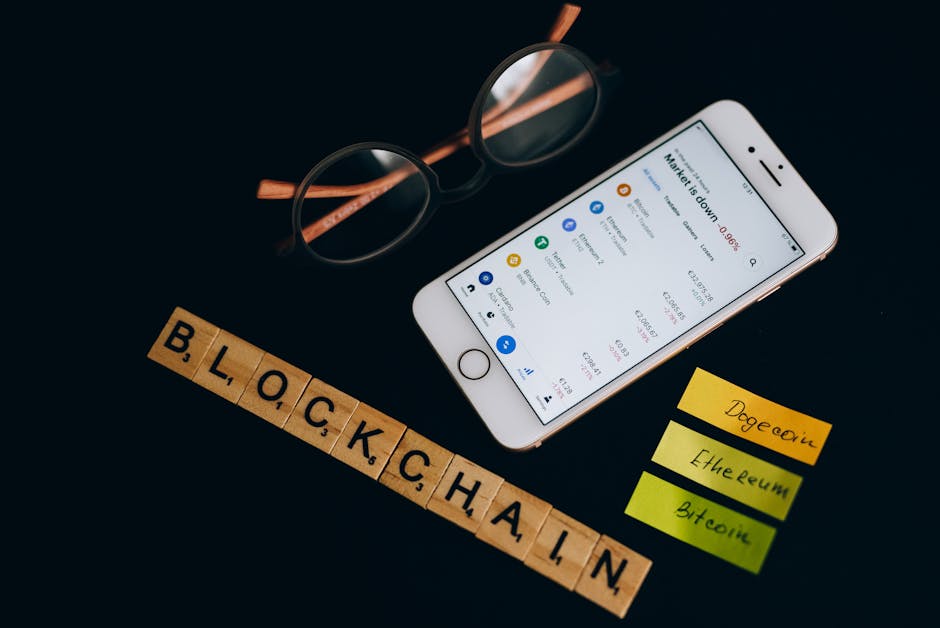
- More instant account-to-account systems. FedNow in the US joins UPI and Pix in the instant-payment model.
- Open banking payments. Pay-by-bank gives merchants an alternative to cards where regulation supports it.
- Embedded finance. Software platforms add payments, lending and payouts inside their own products.
- Tokenized and stablecoin settlement. Pilots and licensed products continue, with rules still differing by jurisdiction.
- AI-assisted fraud detection. Providers keep expanding behavior-based risk scoring, with false declines as the cost to watch.
Related reading: our mobile wallet security guide, a payment gateway comparison, and the digital banking vs traditional banks explainer. For the investor angle, see fintech stocks analysis. Browse all coverage in the complete fintech guide, or find more fintech articles on the hub.
FAQ
What is a digital payment fintech solution?
It is a software or network service that moves money electronically, including mobile wallets, payment gateways, P2P apps and instant bank-transfer systems. A licensed institution holds the funds underneath.
How do digital payment fintech solutions work?
Credentials are tokenized and encrypted, the payer is authenticated, an authorization request goes over card or bank rails, and banks settle the funds afterward. Instant systems compress settlement to seconds.
Is it safe to use digital payment fintech solutions?
Generally yes with a licensed provider that follows PCI DSS, TLS encryption and tokenization, and with multi-factor authentication switched on. Phishing and account takeover remain the main user-side risks, so never share one-time codes.
Why do businesses adopt digital payments?
Typical drivers are online and mobile sales, faster checkout, less cash handling, automatic reconciliation and access to markets where wallets or instant bank transfers are the norm.
How to start implementing a digital payment solution?
Map your payment flows, choose a licensed provider suited to your markets, use hosted fields to limit PCI scope, test thoroughly in sandbox mode, handle webhooks and refunds, then launch with monitoring.
Disclosure: XPERTRAX (xpertrax.com) is an affiliated platform. Links and pop-ups pointing to xpertrax.com promote it. This article is for information only and is not financial advice.